As geopolitical tensions rise, capital is quietly repositioning. Luxembourg is emerging as a European anchor for globally minded family offices, with Singapore reinforcing the shift from the Asian side.
Capital rarely moves suddenly. But it does move decisively when uncertainty becomes persistent. For Luxembourg, that shift is becoming increasingly relevant.
For decades, Luxembourg has positioned itself as a stable and predictable gateway to global markets. Its fund ecosystem, regulatory credibility, and cross-border reach have made it the default choice for international capital seeking access to Europe. That role is now being reinforced by a broader geopolitical reality.
Wealth is not only searching for returns. It is searching for stability.
Recent tensions in parts of the Middle East have not triggered abrupt dislocations, but they have reinforced a trend that has been building for years. Capital is becoming more cautious, more selective, and more deliberate in where it is placed. Diversification is no longer only about asset classes. It is about jurisdictions.
Capital is becoming more cautious, more selective, and more deliberate in where it is placed. Diversification is no longer only about asset classes. It is about jurisdictions.
In that environment, Luxembourg’s value proposition becomes clearer.
It offers predictability. It offers governance. It offers an ecosystem that allows capital to be deployed across Europe and beyond with confidence. For globally minded investors, particularly family offices, that combination is increasingly difficult to replicate.
At the same time, another part of this shift is visible from Asia.
Singapore’s rise as a family office hub reflects similar dynamics. The city-state has built a compelling environment through regulatory clarity, political stability, and a highly coordinated approach between policymakers and industry. It has become a natural gathering point for Asian capital.
Singapore’s rise as a family office hub reflects similar dynamics. The city-state has built a compelling environment through regulatory clarity, political stability, and a highly coordinated approach between policymakers and industry.
But Singapore is not a substitute for Luxembourg. It is a complement.
Family offices operating out of Singapore are not looking to concentrate their exposure in a single region. They are building global portfolios that require reliable anchors in multiple jurisdictions. For Europe, Luxembourg is increasingly that anchor.
This is where the interaction between the two hubs becomes important.
Singapore is where capital gathers, organizes, and makes decisions.
Luxembourg is where capital is deployed and scaled across Europe.
Together, they form a corridor that reflects how modern wealth behaves.
It is mobile, but cautious. Global, but selective. Opportunistic, but anchored in trust.
Luxembourg’s strength lies in its consistency. It does not compete on headlines or speed. It competes on reliability. Its regulatory framework is widely recognized. Its fund ecosystem is deeply embedded in global distribution. Its ability to support increasingly complex investment strategies, particularly in private markets, continues to evolve.
In a more fragmented world, these attributes become more valuable, not less.
Singapore’s family office boom is often described as a success story in its own right. That is true. But it is also a signal of something broader.
Capital is repositioning.
And as it does, Luxembourg is not simply participating in that shift. It is becoming one of the places where that capital ultimately lands, is organized, and is deployed.
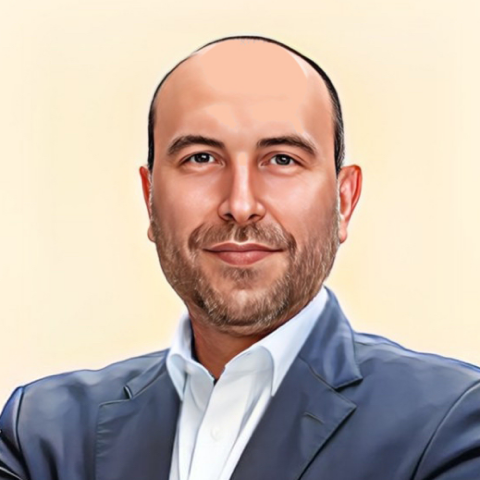
Christophe Santer is a columnist for Investment Officer Luxembourg. He serves as a consultant at Mangis Bay, a boutique cooperative of senior experts for the global fund industry.