International expansion has long followed a predictable script in financial services. A firm identifies a promising market, opens an office, hires a local sales team, and slowly builds relationships.
That model is beginning to look outdated.
Today many fund administrators, wealth platforms and fintech providers are highly successful in their home markets, yet hesitate to replicate that traditional playbook abroad. The reasons are obvious. Setting up foreign subsidiaries is expensive. Hiring local teams takes time. Regulatory complexity adds friction. And the reality of international business development is often slower than expected.
Yet global demand has rarely been stronger.
The strategic question is no longer whether firms should expand internationally. The question is how to do so without committing millions before the first client is signed.
North American fund administrators want access to Europe’s private markets ecosystem. Asian technology platforms are looking to connect with European asset managers. European service providers increasingly look toward Asia, particularly Singapore, as a gateway to regional capital and innovation.
The strategic question is no longer whether firms should expand internationally. The question is how to do so without committing millions before the first client is signed.
This is where a new model is emerging: sales-as-a-service.
Instead of building permanent local teams immediately, firms increasingly rely on experienced industry professionals who operate independently but bring deep networks and regional expertise. These specialists act as strategic connectors. They open doors, translate local market dynamics, and guide firms through the early stages of market entry.
In practice, the model is surprisingly efficient.
A North American administrator exploring Europe does not necessarily need a full Luxembourg office on day one. What it needs first is access. Introductions to GPs, AIFMs, law firms, and other service providers who shape the ecosystem. Similarly, an Asian fintech platform entering Europe benefits from someone who understands how European asset managers think, how procurement works, and how decisions are actually made.
European firms expanding into Asia often underestimate the importance of trust networks.
The reverse is equally true.
European firms expanding into Asia often underestimate the importance of trust networks. Singapore, for example, operates less like a marketplace and more like an ecosystem built on relationships. Understanding that nuance can determine whether market entry takes two years or ten.
Having spent many years working between Luxembourg and Singapore, I have often seen how these two financial ecosystems approach international expansion differently, yet ultimately face the same challenge: building trusted relationships in markets that are geographically distant but strategically important.
Sales-as-a-service helps close that gap. It allows firms to test markets before committing large resources. It accelerates relationship building. And it provides strategic intelligence that would otherwise take years to develop internally.
It also challenges a long-held assumption in financial services: that international credibility requires an immediate physical presence.
Luxembourg is particularly well positioned for this model.
The country’s financial industry has always been international by design. Funds structured in Luxembourg are distributed globally. Service providers collaborate across jurisdictions daily. In such an environment, cross-border business development is not a secondary function. It is the lifeblood of the ecosystem.
Seen through that lens, sales-as-a-service is not merely a temporary workaround for firms that cannot yet afford global offices. It may become the default first step in international expansion.
In a world where talent is mobile and relationships travel faster than corporate structures, the most valuable asset may no longer be the office you open abroad. It may be the people who already know how to navigate the market.
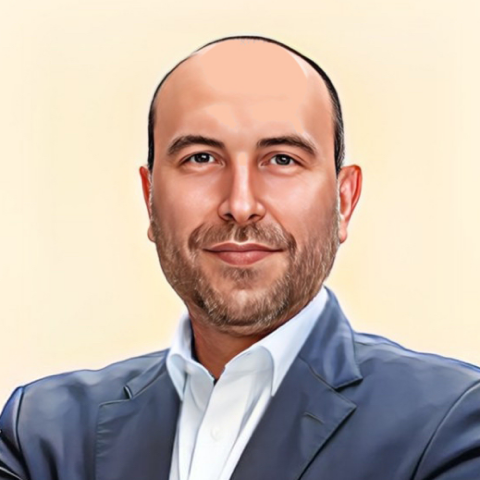
Christophe Santer is a columnist for Investment Officer Luxembourg. He serves as a consultant at Mangis Bay, a boutique cooperative of senior experts for the global fund industry.