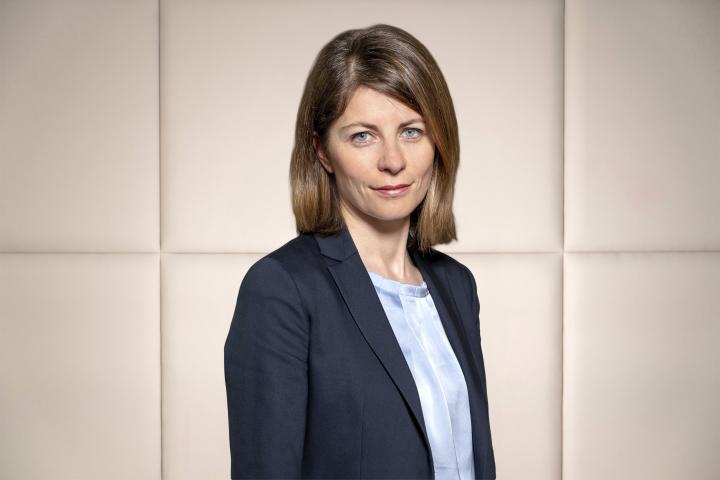
When it comes to passing on assets, Luxembourg’s wealthy are focused on legacy rather than tax optimization, according to Ellen Brullard, chair of STEP Benelux and counsel at Arendt & Medernach. Anticipation is key, though it is more complex than it sounds.
The French proverb “On ne déshabille pas avant d’aller au lit” translates literally to “One doesn’t undress before going to bed,” but can be taken to mean that one should not have to give away everything before dying. That’s how Ellen Brullard, counsel for private clients at the law firm Arendt & Medernach, describes the transfer of assets in Luxembourg. She specializes in estate planning, international succession and private wealth structuring and chairs the Benelux branch of STEP, a global association of inheritance and succession experts.
As part of the Great Wealth Transfer, billions are expected to change hands over the coming decades. But are older generations in Luxembourg prepared to pass on their wealth?
“It’s not in human nature to deprive yourself of what you have during your lifetime. It’s not something natural,” said Brullard. A person doesn’t even need to be extremely wealthy for these questions to come up. Even considering how two or more children might inherit their parents’ house can be complex.
A desire to keep control
In neighboring countries, the tax implications of transferring wealth have led to an evolution in mindsets. Because France and Belgium have inheritance taxes, “people have been obliged to change what is ‘natural,’” Brullard said. People in those countries must consider tax implications when deciding what will happen to their estate after death, and often donate or gift assets during their lifetime to avoid heavy taxes later.
This is not the case for Luxembourg residents, as the grand duchy does not impose inheritance taxes on direct heirs. That means people have not been forced to change their way of thinking. “They do not have this culture of anticipating the transfer of assets during their lifetime,” said Brullard. “They have this mentality of keeping [control].” Many older clients do not want to transfer their assets or company governance, even in their 80s or 90s.
This is where advisers like Brullard come in. Challenges like longer life expectancy and potential mental incapacity mean it is essential to discuss the handover of a family company well in advance. With increased wealth, globalization, relatives living abroad, and assets spread around the world, estate planning has become much more complex, making anticipation crucial.
Preserving legacies
Anticipating the transfer of assets is not only driven by tax considerations. Luxembourg residents are more interested in safeguarding their wealth and legacy over the long term. They want to transmit their values, identity, and purpose.
“People want to anticipate the shift of governance, to prepare for the leadership transition. They want to continue the family estate—and not only just for the next generation, but beyond,” said Brullard. “Now, we are looking at how to transfer and organize with grandchildren, for example.”
A sensitive subject
Clear and open communication is key as it can help avoid litigation among members of the next generation, but not everybody is ready for these conversations. “It’s a difficult exercise,” said Brullard. “They know that they may frustrate a few of their children, or cause tensions. So it’s really brave to communicate. If you put that in a will, no matter what happens after, you’re not going to have a problem with your children. If you put it on the table before, you may have problems during your lifetime… you take a risk.”
The mentality among the wealthy is evolving, Brullard emphasizes, though not everyone moves at the same pace. “We still have families who do not want to communicate at all. We say: ‘For you, it’s important to proceed.’ And they are totally like an oyster; they do not open up at all. You have others who listen, who are conscious of the importance of anticipating, who communicate and structure their wealth in a way that protects descendants.”
Creating tailor-made solutions
Every situation is different. In some families, the heirs are engaged and want to be involved; in others, the children have zero interest in running their parents’ business later on. Words don’t always align with actions: in certain cases, the head of the family wants to maintain control, despite articulating a desire to hand over the reins. “We have a lot of families where they say: ‘Yes, I want my son to come in!’ But then we hear that every idea that the son gives is a no-go.” At the end of the day, however, “we’re not there to say who’s right and who’s wrong.”
Brullard’s role – and that of other inheritance and succession planning experts – is to listen, guide families, and anticipate. Because each case is unique, solutions are always tailor-made. “In my practice, copy-paste does not exist,” said Brullard. “I have never copy-pasted a solution in 10 years at Arendt. You do not have one solution that works for everything. You can have the same tools, but you always need to adapt.”