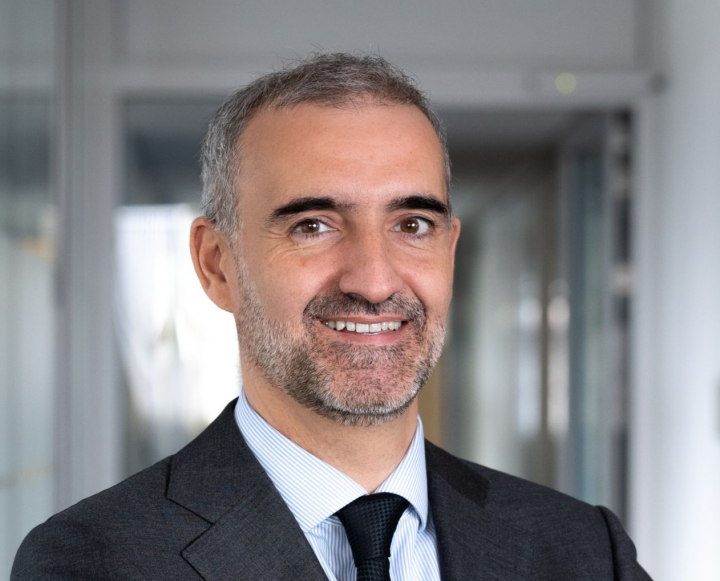
Despite a steady increase in the number of European long-term investment funds over the last two years, concerns around gold-plating continue to persist, with France attempting to exclude non-domestic Eltifs from French life insurance products. For Alfi CEO Serge Weyland, “this is against all the EU laws.”
Alternatives have seen strong growth in Luxembourg, which counted 2.800 billion euro in AIF assets under management at the end of October 2025. Revised regulation around European long-term investment funds (Eltifs), which entered into force in April 2023, aims to include a broader scope of eligible assets, lowers minimum investment thresholds, and provides for more flexible portfolio compositions. Broader access to illiquid assets and private markets, for wealth management players and family offices, for instance, have been facilitated by Eltifs and Part II funds.
Some 281 Eltifs are listed in the European Securities and Markets Authority register as of 12 February 2026, with Luxembourg-domiciled funds accounting for roughly 55 percent and France accounting for 25 percent. Looking back roughly two years, there were 101 Eltifs on the Esma register in April 2024, with 65 percent domiciled in Luxembourg and 20 percent in France. Though Luxembourg still accounts for the majority of Eltifs, there are tensions around protectionist tendencies in France, particularly when it comes to the eligibility of non-French Eltifs in French life insurance products.
“This is against all the EU laws and the spirit of the free market,” said ALFI CEO Serge Weyland in response to a question from Investment Officer during a media briefing hosted Thursday morning. “It’s unacceptable. The Commission has issued Q&As around Eltifs recently, where this item has been singled out in their Q&A, where they made very clear that it was unlawful to do so. We expect the Commission to take action… We will continue to pursue this issue and be very vocal about it, because it’s simply unacceptable. That’s not how you build deeper capital markets in Europe. It’s exactly the opposite.”
Think European, not just local
Building deeper capital markets and getting money flowing across the continent is an initiative near and dear to the European Commission’s heart, particularly in order to boost Europe’s competitiveness and to help finance sectors like defence, infrastructure, and innovation. But it’s impeded, in part, by issues like this. “These are the things that are killing Europe,” said Weyland.
A lot of the French products in question invest in domestic private assets and finance the local economy, he added. But to paraphrase a quote from former Belgian prime minister Paul-Henri Spaak, there are two types of countries in Europe, said Weyland. “Small countries, and large countries which have not yet realised that they are small.” These countries need to start thinking “European,” not just local. “Pushing French investors into French startups only or French private equity only is too risky.” Diversification is key, he added, and “from an investor perspective, that’s not acceptable.”
All this, however, is not an argument in favour of centralised supervision. In fact, “it’s exactly the opposite. Supervision will not solve that problem. It’s outside the supervisory space,” Weyland noted. “This is within local laws.”
The issue is currently being scrutinised by the Commission, but should that not bear fruit, the only process to change that would be to bring it to the Court of Justice of the European Union, as it would be considered a “breach of union,” added Alfi deputy CEO and general counsel Corinne Lamesch.
Interest in Eltifs outside of Europe
Indeed, Luxembourg is not just thinking European, but global. The trend towards broader access to private markets is also observed outside of Europe, Weyland noted, referencing discussions held during Alfi’s roadshow to Singapore at the end of January, and Eltifs could play a role.
“Singapore has launched, for example, a market survey to gauge the appetite for retail private market products, and we expect them to issue guidelines for similar domestic products by year-end, which then will open up the opportunity for mutual recognition or soft approval for Luxembourg funds into Singapore, of Eltifs or Part II funds,” he said. “That’s going to be another opportunity for potentially replicating the success of Ucits with Eltif and Part II funds, in those jurisdictions outside of Europe.”