Wealthy families are no longer anchored to a single country, and neither are their assets. As heirs disperse and capital flows across jurisdictions, succession planning is shifting from domestic estate structuring to cross-border patrimonial engineering, a transition that is quietly reshaping Luxembourg’s role in European wealth management.
While Luxembourg has a stable framework for wealth planning, one of the major trends driving succession matters is related to geography. “Even for Luxembourg resident clients whose professional assets are located mainly in Luxembourg, families and private assets are increasingly spread across different countries,” explained Mélanie Lecuyer, head of wealth engineering at BGL BNP Paribas Banque Privée, in an interview with Investment Officer. This “multiplication of geographies, combined with the increasing mobility of the next generation… requires more anticipation and a structured reflection,” she added.
“Multiplication of geographies, combined with the increasing mobility of the next generation… requires more anticipation and a structured reflection.”
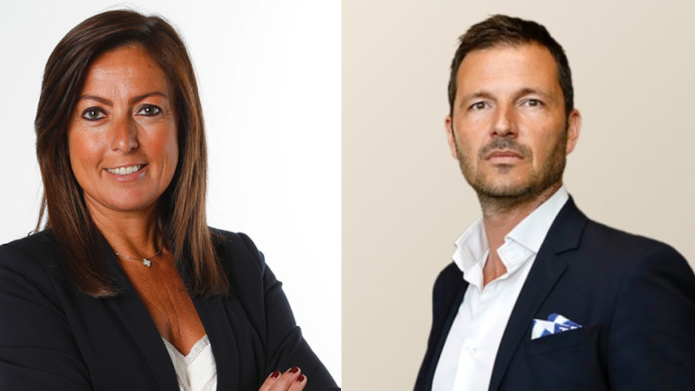
Mélanie Lecuyer, BGL BNP Paribas Banque Privée
This is something Pascal Rapallino, chairman of the Luxembourg Association of Family Offices (LAFO), has also witnessed. He sees Luxembourg as “the best in Europe” for wealthy clients and estimates that 10 to 15 wealthy families moved to the Grand Duchy in 2025, which he called “huge compared to previous years,” even if the country isn’t necessarily topping the list in terms of overall physical moves.
While in earlier decades wealthy boomers would have opted to move to Switzerland, the next generation is opting for other locations, Rapallino said. For instance, “Sometimes they want to live in Dubai, they want to invest in the U.S. and Asian countries. So the question is, what is the perfect hub in terms of structuring these assets?”
“Sometimes they want to live in Dubai, they want to invest in the U.S. and Asian countries. So the question is, what is the perfect hub in terms of structuring these assets?”
Pascal Rapallino, LAFO
One of the answers, he said, is in the special purpose vehicle (SPV), a wealth vehicle which can be tailored flexibly in terms of the various layers of investors, investments and needs for diversification. SPVs are useful for addressing cross-border fragmentation, mitigating risk from their parent company and serving as a neutral structure through which investors across multiple locations can pool resources without having to navigate a variety of local laws. Rapallino added that there has been a “huge increase, maybe one new SPV per month for these families,” which has provided “good momentum for Luxembourg”.
Shifts in demand
As Lecuyer pointed out, BGL BNP Paribas, in its role as private bank, is often an accompanying capacity, serving as a first point of client contact when it comes to succession matters. Clients seek to better understand how assets would be treated in Luxembourg or to discuss general matters linked to succession. “This is where the wealth planner or patrimonial engineer plays a key role: helping clients structure their reflection, understand the implications at a high level, and identify when it is appropriate to involve their usual advisors, such as fiduciaries, notaries or lawyers, for implementation.”
BGL’s head of wealth engineering added that even without complex structures, these clients are increasingly asking for bespoke services, which “lies in the dialogue and the way we accompany clients,” Lecuyer noted. “Tailor-made does not necessarily mean sophisticated structuring. It means adapting the discussion and the analysis to the client’s personal situation, expectations and concerns.”
Meanwhile, Rapallino also serves as partner of Côme Maison Financière, a French wealth management company which has a pool of 50 clients. He has seen a shift among them in terms of making more “patriotic” decisions. On a first level, he sees investors wanting to invest more in France; on a second level, to invest more in European companies.
Côme Maison Financière is also betting on Luxembourg, having announced on 13 January the opening of its first foreign office in the country. It sees the Grand Duchy as “the nerve center of wealth management in Europe”. The strategic move marks a first step to expand across the continent and “responds to growing demand for support capable of managing assets across multiple borders in a seamless manner, while benefiting from a stable and recognized regulatory environment,” according to its announcement.
European firms coming back to top of the list
While Côme Maison Financière’s clients still tend to invest in U.S. and Israeli companies, over “the past three, four years, European companies were not on top of the list. And now, over the past few months, European companies are coming back to the top of the list from a pragmatic perspective,” Rapallino added. “We have to invest in Europe if we don’t want to be dead within the next decade. That’s a strong commitment for wealthy families.”
Rapallino also noted that while the wealthy families may have been “reluctant” to invest in ESG products some five years ago since the returns were low, now these products are offering a “decent return, so it’s the best of two worlds.”
Intergenerational wealth transfer
Through the unprecedented “great wealth transfer” currently underway, it’s expected that over 80 trillion dollars in assets will be transferred to the next generation through 2045. This wealth transfer is concentrated in the US, UK, Europe and Japan. Rapallino sees Luxembourg as one of the “key countries” for that to play out, arguing that sector actors will need to keep up with the next generation of demands, which won’t be the same as the previous generation.
For BGL BNP Paribas, one of the questions is, indeed, when and how to involve the next generation. “Younger family members are often more international, more mobile and keen to understand how things work, even if they are not directly involved in decision-making,” Lecuyer said, adding that private banks are well positioned to facilitate intergenerational dialogue, given the fact that they “have long-term relationships with families and can act as a neutral and trusted interlocutor.”
Early involvement, even if only for educational purposes at first, is also key to a smooth succession, she argued. “At our level, we often encourage clients to include their children in meetings, progressively and in an open way,” she said. “The objective is not to transfer responsibility too early, but to foster understanding and transparency.”