Eastern Europe has been growing faster than the West for years. Western European companies are benefiting from that growth through large-scale factory investments. International investors, however, have completely missed the bull market. They left after the war in Ukraine and have not returned. According to analysts at Fidelity International and Karoll Capital, it is time to come back.
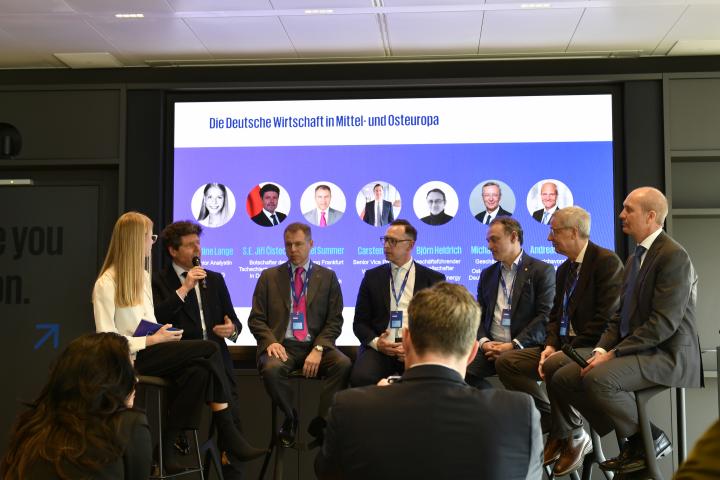
Jiří Čistecký, the Czech ambassador in Berlin, sits on stage with a broad smile. Not surprising. He has just spent an hour at a KPMG symposium listening to praise for Central and Eastern Europe, especially his own country and neighboring Poland.
“The CEE region offers enormous opportunities for German companies,” said Michael Harms, chairman of the Ost-Ausschuss der Deutschen Wirtschaft, for example. Trade between Germany and 29 countries in Central and Eastern Europe (excluding Russia) increased by 3,4 percent last year to 550 billion euro. Investments are also rising sharply. “Poland and the Czech Republic are particularly popular, but there is also significant investment in Ukraine despite the war.”
Growing economy, large discounts
A KPMG survey of 115 companies active in the region shows that a large majority plan to expand their investments in the coming years, in some cases substantially. According to Konstantin Prodanov of Bulgarian asset manager Karoll Capital, investors can benefit from this in several ways. First, the economy is growing rapidly, but this is hardly reflected in valuations by institutional investors. The result is large discounts and an underweighting of Eastern European equities in portfolios of up to 90 percent.
Fund manager Zoltan Palfi of the Fidelity Emerging Europe, Middle East and Africa fund confirms this. “After the 2008 financial crisis, there was a period of increased interest in the region, which boosted prices. But with the war in Ukraine and high energy prices, that optimism disappeared and many institutional investors sold their shares,” he said. “In addition, they often consider Eastern European stocks too small and illiquid. Large investors do not like that.”
Nevertheless, he argues that there is a strong case for greater exposure to Eastern Europe, as economic growth is likely to remain above the EU average for years. “Eastern Europe often receives negative coverage in the media due to political conflicts and corruption. But if you ask Western European or Asian companies investing there, you hear a different story,” he said, referring to factors such as tax benefits, direct access to policymakers, and low labor costs within the secure regulatory framework of the EU.
According to Harms, the fact that Eastern Europe is simply a large sales market is the main reason why it is so important for Germany. Poland in particular, with its 36 million inhabitants, stands out with a GDP that exceeded 1.000 billion dollar for the first time in 2025. That makes it larger than Switzerland, and there is still plenty of room for growth, with an expected expansion of another 3,5 percent in 2026.
Poland, Hungary and the Czech Republic
The mindset in CEE countries is also praised at the Berlin meeting. It is one of rolling up sleeves and accelerating, rather than slowing down and standing still. “Eastern Europe has much of the energy that we had in Germany in the 1970s,” said Carsten Sattler at the event. He is vice president of the Würth Group, one of the larger German industrial companies with years of experience in Eastern Europe. He has recently seen many reports about German deindustrialization. “That is greatly exaggerated, but the fact is that growth and dynamism are in the East.”
To benefit from that growth through investments, Prodanov and Palfi first turn to Poland. Not only is it the largest country, it also has the most developed stock market. Companies from neighboring countries even regularly choose a listing in Poland to increase their visibility.
Other important markets are Hungary and the Czech Republic. In addition, the managers at Karoll and Fidelity invest in several Austrian companies that generate a large share of their revenue in Eastern Europe. One example at Fidelity is Austria’s Erste Bank, which derives about two thirds of its revenue from Eastern Europe.
Palfi’s fund, with around 340 million euro, also has the flexibility to invest in stocks from the Middle East and Africa, the EMEA region. Prodanov, by contrast, takes a purely Eastern European approach with his 90 million euro fund, as this offers added value for a relatively small asset manager like Karoll Capital.
In terms of sectors, both opt for broad diversification with an overweight in financials. Banks are an optimal way to benefit from economic growth and rising real wages. First, banks benefit when people have more to spend. Second, they gain from foreign investments by companies.
As an example, Prodanov cites Mercedes, which announced last March that it will invest an additional 1 billion euro in its factory in the Hungarian city of Kecskemét. Such a factory investment generates a range of other economic activities, from construction companies to suppliers. “Often smaller companies without a stock market listing, but which do need credit from local banks such as Hungary’s OTP.”
That not everything is smooth sailing is also evident from the KPMG survey. Many companies avoid Hungary as long as Viktor Orbán remains in power, with the exception of the automotive industry. BMW, Mercedes and Volkswagen are investing billions in Hungarian factories. Romania and Serbia also rank lower in the KPMG survey due to the political climate, but overall the outlook for the entire region is excellent, both for companies and investors.