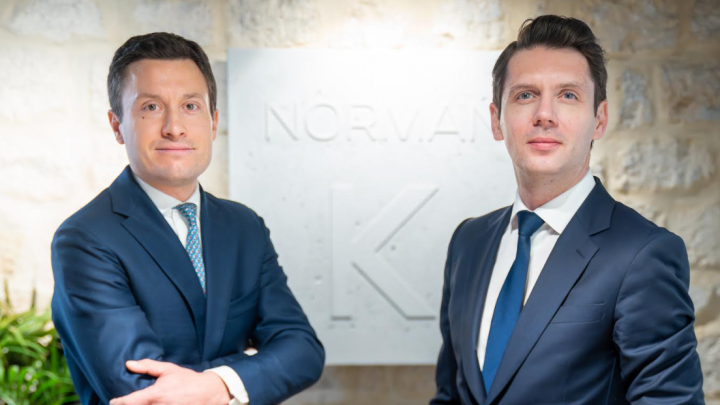
Luxembourg is increasingly becoming an operational necessity rather than a strategic option. From independent wealth structuring firms such as Norman K to large private banking groups including Rothschild Martin Maurel, institutions are reinforcing their presence in the grand duchy to serve an increasingly international client base amid growing cross-border complexity and regulatory pressure.
This shift is visible in two parallel developments. Established private banking groups are strengthening or formalizing their Luxembourg presence to anchor pan-European operating models, while independent firms operating at the intersection of private banking, family office services and specialised financial advisory are using the grand duchy as their primary structuring base. In both cases, a local entity is no longer a matter of optional presence, but a prerequisite for operational credibility vis-à-vis clients, counterparties and regulators.
It is against this backdrop that Norman K has opened an office in Luxembourg. For Nicolas L’Hermite, managing director of the firm in the grand duchy, the decision reflects a structural logic rather than a one-off opportunity.
“When you accompany international shareholder families with assets spread across several European jurisdictions, effective structuring without Luxembourg becomes extremely difficult.”
Nicolas L’Hermite, Norman K
 “When you accompany international shareholder families with assets spread across several European jurisdictions, effective structuring without Luxembourg becomes extremely difficult,” L’Hermite told Investment Officer.
Beyond legal structuring, a local presence allows governance, compliance and execution to be centralised within an environment recognised by regulators and supported by an ecosystem sufficiently developed to address complex wealth structures. This operational dimension has become increasingly decisive as transparency requirements, risk controls and reporting obligations have tightened in recent years, affecting both banks and independent players.
Operationally indispensable
These structural pressures are reshaping how the Luxembourg wealth management ecosystem operates in practice. The financial centre has established itself as a centre of gravity for cross-border wealth management in the euro area. It is now home to more than 40 private banks managing more than 600 billion euros in assets, according to market data.
While the number of institutions has remained relatively stable for several years, it masks a more nuanced reality. Structures are being rationalised, certain business lines and geographic scopes are being scaled back, and key functions are increasingly concentrated, particularly in compliance and governance.
This evolution reflects a deeper shift in the expectations of wealthy clients and international entrepreneurs. They are no longer looking solely for a custodian or an investment provider, but for the ability to orchestrate complex arrangements combining liquid assets, private markets, holding structures and financing, within a legally and regulatorily robust framework.
Consolidation as filter
The rising complexity of wealth structuring is directly contributing to market consolidation. While the banking sector is relatively concentrated by nature, the trend is particularly visible among independent wealth management and family office players. Higher regulatory costs, the need to maintain robust internal control functions and rising client expectations are making the long-term viability of smaller structures increasingly difficult.
“We will see fewer and fewer independent players without sufficient critical mass to absorb these constraints,” L’Hermite said. Many market participants now refer to viability thresholds of between 500 million and 1 billion euros in assets under supervision, below which sustaining a full-service, compliant offering over the long term becomes increasingly challenging. Norman K is in the “few billion” euro category.
In this context, mergers, partnerships and specialisation are emerging as strategic responses. Luxembourg, positioned in sophisticated and highly internationalised wealth segments, is particularly exposed to this dynamic, gradually raising the economic entry threshold for players seeking to establish or expand their presence.
Rothschild Martin Maurel
At the same time, major European institutions are reaffirming the strategic importance of the financial centre. In May 2025, Paris-headquartered bank Rothschild & Co opened a wealth management branch in Luxembourg, anchoring it through Rothschild Martin Maurel, its European private banking platform built after its 2016 acquisition of private bank Martin Maurel. While the group had been registered with the CSSF for many years, this move marks a significant shift in its operational footprint.
“Luxembourg benefits from deep financial expertise, and its international dimension makes it an essential centre, at the heart of Europe, for entrepreneurs and private clients who already have, or are considering organising, their activities and wealth on an international basis.”
Marie-José Vackier, Rothschild Martin Maurel
 For Marie-José Vackier, chief executive of the group’s private bank in Luxembourg, the objective is clear. “Luxembourg benefits from deep financial expertise, and its international dimension makes it an essential centre, at the heart of Europe, for entrepreneurs and private clients who already have, or are considering organising, their activities and wealth on an international basis,” she said.
She also pointed to the group’s intention to broaden the booking options available to clients in a country recognised for its economic and financial stability, its AAA rating and the quality of its financial industry.
In an environment where wealth is increasingly international, where private markets are taking on a growing role and where regulatory requirements are redefining economic viability thresholds, Luxembourg is increasingly functioning less as a location and more as core market infrastructure. This shift is gradually reshaping the competitive landscape for smaller players and contributing to a broader reconfiguration of European private banking.