
Imagine this: your boss can see exactly when you’re sitting at your desk, what time you arrive, what time you leave, and when you take lunch. It almost sounds like a nightmare from a dystopian novel, but for 300 equity analysts, this was daily reality between 2017 and 2021.
American researchers gained access to these analysts’ Bloomberg terminals. Minute by minute, they could see when someone logged in, how long they were active, when the dot switched from green to yellow because someone stepped away for coffee. And then something interesting happened: Covid hit.
Suddenly, all those analysts who would normally spend half their week traveling to companies, conferences, and dinners with investors couldn’t go anywhere. They stayed home. They had no more Zoom meetings. They stopped flying and shaking hands on trading floors. And what happened? Their forecasts suddenly became much worse.
The analysts who had traveled most frequently before the pandemic saw their forecast errors increase by nearly 12 percent. This was especially true for companies located far away, sometimes more than 400 kilometers from their home base. The conclusion is hard to avoid: all that travel, all those face-to-face meetings, actually produced something. It wasn’t theater—it was vital information.
Still, there’s another side to the story. There was also a group of analysts who performed better during the lockdown: those with long commutes. One analyst, for example, used to spend three hours a day on the subway. He gained that time back, and it translated into longer working days. The forecasts of these analysts became significantly more accurate.
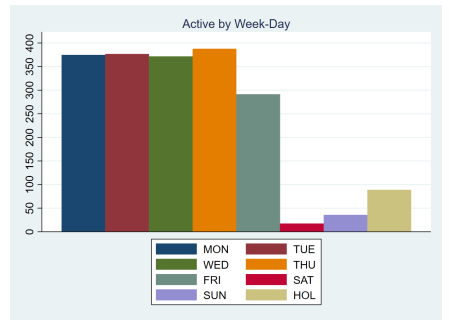
Figure 1: the number of minutes analysts are active
What’s remarkable is that these two groups do very different things. Office-based analysts focus on hard data, spreadsheets, and financial models. The travelers gather soft information: what the CEO really thinks about the competition, how insiders view the new strategy, what concerns are circulating among customers. Both are valuable. Both are essential.
It gets even more curious when you look at who makes it to “All-Star”—a prestigious title that comes with a 60 percent salary increase. Long working hours hardly helped. But being frequently on the road? That made the difference. Especially the kind of travel that can’t be linked to specific corporate events. The dinners, in other words, the informal meetings with investors who vote for those All-Stars.
This is where my inner cynic comes out
Those institutional investors—the people who ultimately decide whether you become an All-Star—turn out to reward those who invest time in them. Not necessarily the analysts with the best forecasts, but those who do the most “schmoozing.” The data doesn’t lie: travel to events improves forecasts, but other types of travel mainly predict your career success.
What does this mean for the post-Covid world, where hybrid work has become the norm? If analysts work from home more often, they may perform better in the short term. But do they lose the connections that can make their careers? And what happens if companies organize fewer in-person events? Then we lose exactly the source of information that makes forecasts just a bit sharper.
The lesson? Some things only happen when you go to people. That’s true not just for analysts, but for all of us. You can video call, Slack, and email all you want, but certain information only comes when you look someone in the eye. The question is whether we still remember that after three years of Zoom.
Gertjan Verdickt is assistant professor of finance at the University of Auckland and a columnist at Investment Officer.