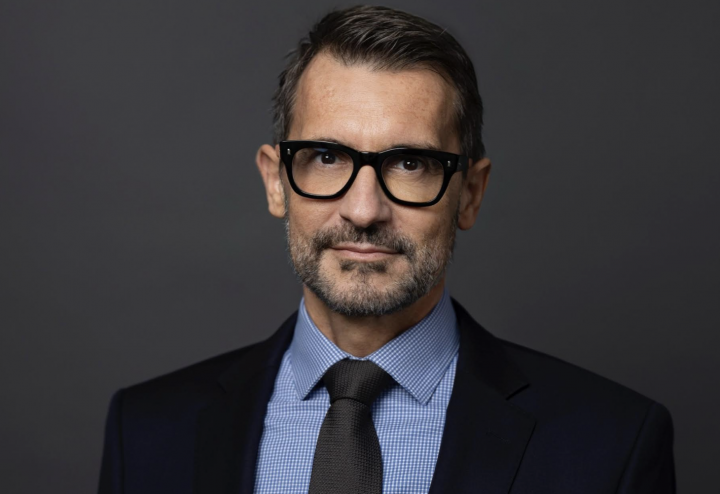
The new chief executive of Europe’s quietly ambitious private bank starts work this week. His profile suggests a fixer. The question is what he intends to fix.
When Thomas Heinzl walks into the group headquarters of Quintet Private Bank (70.3 billion euro in assets under management), he becomes its fourth chief executive in six years. His predecessor Chris Allen restored profitability, reduced costs by cutting 165 jobs in six countries, and rebuilt the capital base. That turnaround phase is largely complete. What follows is less clearly defined, and more difficult to execute.
“We will strive to achieve tangible gains in operational efficiency and meaningful progress toward covering our cost of capital.”
Thomas Heinzl, Quintet
Heinzl, 55, arrives from Zurich-based Vontobel (130 billion in AUM), where he oversaw finance and risk. Before that, he served as chief operating officer at UBS Asset Management and UBS in Europe, the Middle East and Africa, following a decade at McKinsey advising global financial institutions. He holds a doctorate from the University of St. Gallen and a degree in computer science from ETH Zurich.
His profile is not that of a traditional private banker. Heinzl did not build his career on client relationships, but on strategy, operations and institutional design. Quintet’s board has appointed not a rainmaker, but an operator.
A bank shaped by restructuring
Quintet, the holding company behind private banking brands including InsingerGilissen in the Netherlands and Puilaetco in Belgium, has spent much of the past decade in transition.
Founded in 1949 as Kredietbank Luxembourg, the group was acquired in 2011 by Precision Capital, the investment vehicle of members of Qatar’s Al-Thani family, for approximately 1 billion euro. The years that followed were marked by leadership changes, capital injections and shifting strategy.
A 2020 rebranding to Quintet was accompanied by an ambitious plan, engineered by former UBS executives, to integrate the group’s European subsidiaries into a single platform. That full merger plan integrating all national units into Quintet as a single brand name was only partially implemented, leaving the local franchises operationally distinct but under a single corporate structure.
Stability returned only gradually under Allen, who took over in 2022. His focus on cost control and simplification ended a prolonged period of losses. By 2025, Quintet reported a second consecutive net profit of 66.3 million euro, on total client assets of 105.1 billion.
Stability without growth
The latest results reflect consolidation rather than expansion.
Total income declined to 552.7 million euro as interest rates eased. Costs fell further, preserving profitability. Assets under management increased modestly. The overall picture is one of discipline, not momentum.
The cost base remains the central constraint. Quintet’s cost-income ratio improved to 84.4 percent, but remains well above the 65 to 75 percent typical for private banking peers. At that level, more than 84 cents are spent to generate each euro of income. The effect is structural. It limits investment capacity and constrains strategic flexibility.
Heinzl’s own framing reflects that reality. Success, he told Investment Officer in answers to written questions, will be measured not only by growth in clients and assets under management, but by “tangible gains in operational efficiency” and “meaningful progress toward covering our cost of capital.”
That is a precise formulation. It signals that the next phase will be defined by financial discipline before expansion.
He also emphasized internal alignment. The organisation, he said, must operate with “a clear, shared direction embraced by the entire team.”
The owner’s position
Precision Capital has held Quintet for some 15 years now and has injected significant additional capital over that period. For most of those years, the investment produced limited financial return.
The recent return to profitability changes the narrative. The group now has a more credible operating profile and a strengthened capital base. Its common equity tier 1 ratio rose to 22.5 percent in 2025, up from 18.4 percent three years earlier, but still below most of its private banking peers.
At the same time, Quintet remains a relatively low-return, illiquid asset within a broader portfolio. Its shareholder, widely regarded as a patient investor, has in recent years allocated capital to faster-growing sectors.
That combination broadens the strategic horizon. A sale is not inevitable, but the conditions for a transaction are more favourable than at any point since the 2011 acquisition. European banking consolidation has accelerated, and institutions such as BNP Paribas and Julius Baer have shown interest in cross-border private banking platforms.
Two questions to Thomas Heinzl:
IO: Quintet has been through three CEOs and an ambitious merger plan in six years. What does success look like for you personally at the end of year one. And how will you know if you are achieving it?
TH: “We succeed by helping our clients succeed. One key measure will be growth in clients and assets under management, but success goes beyond numbers. We must continuously improve as an organization, with a clear, shared direction embraced by the entire team. We will strive to achieve tangible gains in operational efficiency and meaningful progress toward covering our cost of capital. Above all, this requires commitment—particularly from senior leadership—and builds on the strength of the people who already form the foundation of our firm. My first priority is therefore to listen: to understand our clients and our teams. That focus will shape my first year, with regular travel to meet both clients and colleagues in person.”
IO: Your career has been built on operational transformation rather than client relationships. Private banking is ultimately a people business. How do you see those two things fitting together in the role you are starting today?
TH: “I have first-hand experience advising both large and small investors. From these conversations, and from my time in asset management, I know that strong relationships are essential—but they are no longer sufficient on their own. In an increasingly complex world, which is more and more difficult to read, clients seek security and trust. To meet these expectations, we must excel in three areas: deeply understanding our clients and anticipating their needs; delivering genuine value through excellent products, services and support; and earning trust by staying close to them over time, including from one generation to the next. All of this is only possible with a very strong team—which we have at Quintet—and which I intend to further strengthen to drive innovation across the company and ensure disciplined execution.”
(This article was updated in the 7th paragraph to make clear that Quintet considers the legal merger of its former EU subsidiaries into branches as “rather successfully completed in 2020” and not as “shelved”. The first question has been amended accordingly.)