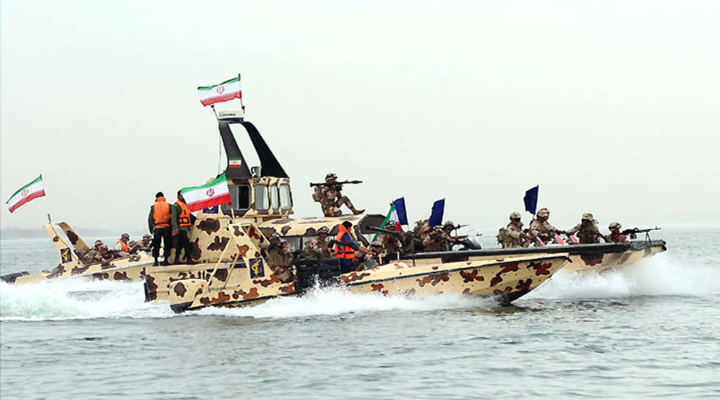
Markets enter the week facing not simply another geopolitical headline, but the prospect of a structural energy repricing. After US-Israeli strikes killed Iran’s supreme leader and Tehran retaliated across the region, investors are bracing for a sharp adjustment in oil and gas markets when trading resumes. The issue is no longer whether risk premia rise, but how disruptive and persistent they may become.
 Dr Cyril Widdershoven, senior advisor at Blue Water Strategy, cautions that disruption in the Strait of Hormuz should not be assessed “through the narrow lens of a formal blockade.” Rotterdam-based Blue Water is an independent strategic advisory helping shipowners, ports, energy companies, traders, institutional investors, and governments
Grey-zone disruption
“Looking at overall posture of forces on both sides, and the involvement of third parties such as China and Russia in the area, a full closure remains unlikely,” he told Investment Officer on Sunday evening. “Still, there is a major, very realistic risk linked to grey-zone disruption. The latter is already emerging as a major factor and could be the dominant scenario in the coming days and weeks.”
Grey-zone disruption refers to calibrated interference that stops short of open warfare but still produces real economic impact. In the context of the Strait of Hormuz, this can include navigation warnings, drone or missile incidents near shipping lanes, cyber interference such as spoofing vessel identification signals, or selective targeting of commercial vessels. The objective is to raise insurance costs, delay sailings and inject uncertainty into freight markets. In modern energy systems, that alone can tighten supply conditions and create sustained price volatility without a single official blockade being declared.
According to Widdershoven, Tehran does not need to mine the Strait or halt traffic outright. “In modern energy markets, disruption becomes real the moment that not only shipowners and charterers but also insurers perceive transit as commercially unmanageable.” The Strait, he adds, can become partially “closed” long before any official declaration or hard military action.
‘Severe market reactions very soon’
“The implications for energy markets and commodities, especially for crude oil and LNG flows, are asymmetric and could trigger severe market reactions very soon,” he said. Strategic reserves are often cited as a buffer, but “this should be taken with a truckload of salt, as it is not only volumes that matter, but crude quality issues.”
Spare capacity, in his view, is overstated. Eight OPEC countries, known as the OPEC+ group, on Sunday announced they would increase oil output from April as a commitment to market stability. “Spare production capacity is only in the Excel sheets, not in reality. OPEC+ spare capacity is in the Gulf region, as Russia is out. So, nobody can deliver, except what has been put on ships outside the region,” Widdershoven said.
LNG market ‘will fracture’
Gas markets may prove even more exposed. “LNG cannot be rerouted because Qatar’s and Abu Dhabi’s only outlet is through the Strait of Hormuz. Around a fifth of global LNG trade still depends structurally on Hormuz transit. Global gas markets will be in for a shock, even if there is temporary hesitation or delayed sailings. The so-called flexible LNG market will fracture, not merely tighten.”
Flexibility in the LNG market refers to the idea that liquefied natural gas can easily be redirected to wherever prices are highest, providing a buffer in times of disruption. While LNG is more mobile than pipeline gas, that flexibility has limits. A significant share of global supply, particularly from Qatar, must pass through the Strait of Hormuz, and specialised shipping capacity is finite. In a chokepoint crisis, cargoes cannot simply bypass the region, meaning the market would tighten sharply rather than smoothly rebalance.
‘Push for more US dollars’
Qatar remains a critical LNG supplier to Europe, providing roughly 12 to 14 percent of EU LNG needs after the shift away from Russian pipeline gas, though its share has eased in 2025 as US volumes expanded, underscoring how exposed European gas markets remain to any disruption in Gulf transit routes.
Asia, Widdershoven argues, will face immediate price escalation, while Europe will again confront supply insecurity. Competitive bidding for cargoes is more likely than coordinated stabilisation. “There will also be a push for more US dollars, which will hit other currencies.”
Widdershoven said that global markets have systematically underpriced maritime energy risk. “Chokepoint issues have been priced as neutral infrastructure in recent years. Geography defines all. Energy security is increasingly determined by perceptions of maritime risk, not by production capacity alone.”
Test for ‘Teflon market’
Against that backdrop, the “Teflon market” thesis faces a far more demanding test. Arnout van Rijn, investment specialist at Robeco, on Sunday asked whether markets can absorb another conflict without lasting damage. “Can the ‘Teflon market’ handle another war?”, he wrote in a note to investors, arguing that US equity stability has become a visible proxy for economic strength.
Christopher Dembik, senior investment adviser at Pictet, expects defensive flows into dollar-denominated assets, potentially pushing US Treasury yields lower and strengthening the dollar. He also sees scope for a stronger Swiss franc. “The CHF, virtually backed by gold, will also increase sharply. It is seen by most institutional investors as the perfect hedge against geopolitical risk.” he wrote on Linkedin.