Amid rising volatility, questions surrounding US interest rates, and uncertainty about the technology sector, Natixis Wealth Management is focusing on diversification in 2026, both geographically and across sectors.
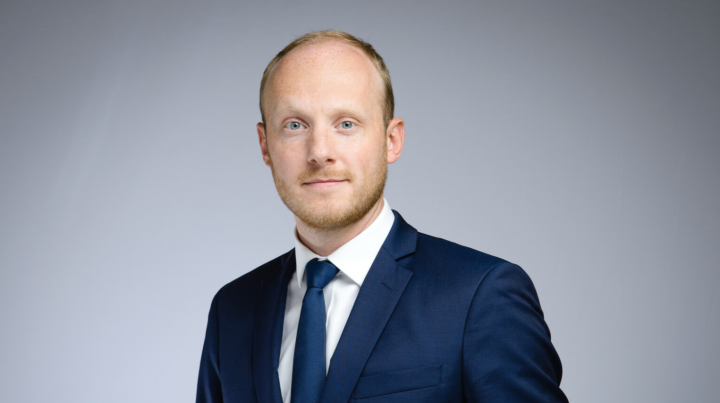
Natixis Wealth Management looks back positively on 2025, a year in which risk assets once again performed strongly after two years that had already delivered substantial gains. “We have had consecutive years with gains of more than 20 percent, something that is historically very rare,” said Benoît Peloille, chief investment officer at Natixis Wealth Management, the name the French firm has used since 2017 for its private banking division.
Nevertheless, he believes it is important to look further ahead. “What is particularly important for wealthy clients is a risk-adjusted approach. We do not aim solely for returns at any price, but also pay close attention to volatility,” said Peloille, emphasizing that volatility was higher this year than in the previous two years.
In addition, the development of the dollar has also had a significant impact on portfolios. “The performance of the S&P500 and technology stocks has been very strong, but when converted into euro it is much less impressive,” he noted. For a European investor, US equities, after adjusting for the exchange rate effect, therefore delivered returns close to those of bonds. In this context, some asset classes, such as gold, have once again taken on a strategic role.
More nervousness ahead
For 2026, Natixis WM expects a more uncertain environment, with increased nervousness. This is because, according to the CIO of Natixis WM, two pillars that have supported risk markets in recent years are now being called into question. The first concerns expectations around interest rate cuts by the US Federal Reserve. The second is the role of the technology sector, where Benoît Peloille sees profit-taking and questions about fundamentals.
To deal with these uncertainties, diversification remains a core focus for the private bank. “The effort to diversify beyond the United States and the technology sector remains relevant, with Europe likely to be the main beneficiary,” he stated. “We are beginning to believe that there is some overheating in the US technology sector, an emerging euphoria that could point to the formation of a bubble.”
The eurozone benefits from a favorable environment in this respect. According to the CIO, Europe has achieved a successful macroeconomic soft landing. “Inflation is under control, unemployment remains at a historically low level, and the economy is starting to pick up again,” Peloille explained. “If there is clarity on a ceasefire in the Ukraine conflict, that would mean one less risk factor for the markets.” European and Asian markets, as well as emerging markets, are seen as alternatives to US equities.
On the fixed income side, Natixis WM’s strategy was to benefit from the return to a more normalized interest rate environment following the sharp rise in rates in 2022. “We have rebuilt significant bond positions,” said the specialist. “The objective is to achieve an attractive return while at the same time protecting portfolios against potential volatility in equity markets.”
Private equity in focus
Given the uncertainties in the markets for the coming year, Natixis WM continues to focus on private markets, and in particular on private equity. “The scenario we are factoring in is a normal cyclical slowdown, not a recession and not a financial crisis,” said Benoît Peloille. “That is why we are taking relatively more risk within the private equity allocation.”
He pointed out that higher volatility over a few months is virtually negligible for private assets over a ten-year horizon. Against this backdrop, Natixis WM has been increasing the weight of private assets in client portfolios for several years, both in private equity and in private debt.
For 2026, Benoît Peloille stated that “caution with regard to US equities and technology is warranted, but potential corrections could offer attractive valuation levels to reposition portfolios.” The private bank’s strategy is therefore “to remain flexible and actively respond to opportunities as they arise.”