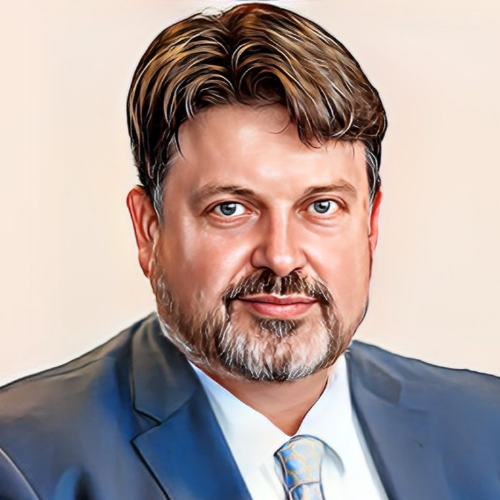
Jerome Powell is stepping down as chair of the Federal Reserve. Kevin Warsh will succeed him. For investors, the big question is whether US central bank policy will really change. The short answer: yes, possibly. And the reason is AI.
Many people think the Fed chair decides what happens to interest rates. That is not entirely correct. Interest rate policy is set by the FOMC, a committee of nineteen members, twelve of whom have voting rights. The chair is important, but he cannot determine the course on his own.
At the most recent meeting, two members voted against the decision to keep rates unchanged. They wanted to cut rates. That shows there are different views within the Fed. A chair who deviates too far from what the majority thinks simply does not get enough support for his plans. Still, a chair can steer the debate. He sets the agenda, sets the tone, and can persuade his colleagues with arguments. And Kevin Warsh has an argument that Powell has never truly embraced.
The lesson of the nineteen nineties
To understand what Warsh might do differently, we need to go back to the nineteen nineties. At the time, Fed chair Alan Greenspan faced a puzzle. The economy was growing strongly, unemployment was falling, but inflation remained low. According to the prevailing models, that was not possible.
Greenspan had an explanation: technology. Computers and the internet made companies more productive. Workers produced more per hour. As a result, the economy could grow without prices rising. Greenspan kept interest rates lower than his colleagues wanted. He was proven right. Warsh now sees a similar situation. AI is increasing productivity in ways we are only just beginning to measure. If that is correct, the economy can grow more strongly than the models predict, without inflation accelerating.
Powell’s blind spot
This is where the big difference with Powell lies. The current Fed chair acknowledges that productivity is rising, but he remains cautious. He wants to see hard evidence before adjusting policy. And he does not attribute the productivity gains to AI.
That caution is understandable. Powell was caught off guard by inflation in 2021. He initially called it “transitory” and later had to intervene forcefully. That experience has made him reluctant to take risks again. But caution comes at a cost. If productivity is indeed structurally higher, the Fed is keeping rates unnecessarily high. That slows the economy and costs jobs that would otherwise exist.
Warsh appears willing to weigh that risk differently. In his writings, he is critical of Fed models that fail to capture reality. He warns against policy that relies too heavily on unreliable data. And he is attentive to major economic shifts that are sometimes difficult to measure.
What does this mean for interest rates?
The market currently expects two rate cuts in the second half of this year. That would happen once inflation clearly declines and the effects of import tariffs have worked through. But if Warsh takes the productivity argument seriously, he could go further. A chair who believes that AI is structurally changing the economy has room to cut rates faster and further than the market currently expects.
That does not mean Warsh will be reckless. On the contrary, he is critical of the cheap money policies of the past fifteen years. “Nothing is as expensive as free money,” he wrote. According to him, the long period of extremely low interest rates led to poor investments, excessive risk taking, and ultimately high inflation. But there is a difference between artificially low rates and rates that fit a more productive economy. In the first case, you create bubbles. In the second, you simply acknowledge that the world has changed.
The puzzle of the current economy
The US economy is behaving strangely at the moment. Unemployment is low, growth is strong, but inflation remains stubborn. Normally, you would expect such a strong economy to generate more inflation.
The explanation may lie in productivity. If workers produce more per hour, the economy can grow without prices rising. The question is whether that higher productivity is temporary or permanent. Warsh leans toward the latter. And if he is right, current interest rates are too high for the new reality.
What does this mean for investors?
For investors, this is important news. A Fed that takes the productivity revolution seriously will cut rates more than is currently priced in. That is good for equities and bonds.
At the same time, a warning is in order. In 2018, Warsh wrote that a period of prosperity is not a moment for complacency. It is precisely then that a central bank must remain alert to risks that are not yet visible. He will not be blindly optimistic.
Under Warsh, the Fed may get a chair who understands that AI is changing the rules of the game. If he can convince his colleagues of that, interest rates will fall faster than the market expects. For investors, that is a scenario worth taking into account.
Han Dieperink is chief investment officer at Auréus Vermogensbeheer. Earlier in his career, he was chief investment officer at Rabobank and Schretlen & Co.