Texas aims to challenge the dominant position of New York and Delaware in the U.S. capital markets with a new stock exchange and more flexible regulation. But sufficient liquidity, reliable price discovery, and investor confidence are not easily achieved, said Onnig Dombalagian, professor of law at Tulane University.
“Just because a company chooses to reincorporate in Texas does not necessarily mean it also aspires to list on the Texas Stock Exchange (TXSE),” said Dombalagian, a specialist in stock exchanges and securities law, in an interview with Investment Officer. “Texas still faces the much more difficult challenge of building the liquidity, price discovery, and investor confidence needed to break New York’s dominant position.”
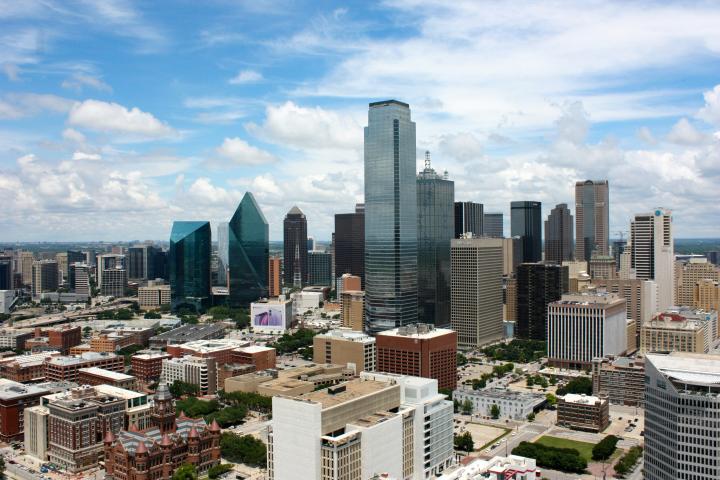
The Dallas-based TXSE is set to begin trading in early July. It is the most ambitious effort yet to transform the Lone Star State into a global financial center: one more friendly to executives and less shaped by what supporters see as the overly progressive politics of the American East Coast.
With nearly 300 million dollars in backing from financiers such as BlackRock, Citadel Securities, Goldman Sachs, JPMorgan, and Bank of America, it is the best-capitalized exchange ever approved by the Securities and Exchange Commission.
Texas’ ambition to disrupt the East Coast power bloc — with New York dominating the financial markets for decades through the NYSE and Nasdaq — as well as Delaware, the legal home of corporate America, is impressive, Dombalagian said. “But so are the structural obstacles.”
Competition between U.S. states
According to Dombalagian, a stock exchange listing must be economically attractive enough for companies to choose Texas. TXSE cannot rely solely on a broader conservative wave, however much that sentiment has evolved into a striking economic weapon in the modern competition between U.S. states.
Texas has already taken concrete steps to strengthen its position. In 2024, lawmakers established the Texas Business Court, a specialized court system for commercial disputes intended to position the state as a credible alternative to Delaware. In 2025, corporate law was amended to provide greater protections for directors and executives, while making certain shareholder lawsuits and activist proposals more difficult.
Since then, Tesla and Coinbase have moved their legal domicile to Texas, while Exxon has also shifted its corporate headquarters structure to the state. This is seen as early evidence that Texas’ legal and political strategy is gaining momentum.
‘Woke’ capitalism
The promise of the TXSE itself is primarily practical: lower costs and faster, simpler order processing. But the branding is also clearly ideological, positioning the exchange as a counterweight to what many supporters describe as woke capitalism.
Governor Greg Abbott has put it more explicitly. “Capitalism cannot flourish in the shadow of communism,” he told Fox News in April, adding that “American stock exchanges are expanding beyond communist-run New York City and strengthening their presence right here in Texas.”
“Regulation will be lighter, costs will be lower,” Abbott said. “What we want to get rid of are all those ESG standards and other policies imposed by exchanges.”
According to Dombalagian, that political identity may resonate within the United States, particularly with founder-led companies or energy firms seeking fewer governance constraints. Outside the U.S., however, it could create complications, especially in Europe, where large institutional investors have often deeply embedded ESG standards, governance frameworks, and reporting requirements into their capital allocation processes.
Ideology versus market credibility
In 2025, Texas passed a law requiring proxy advisers to base recommendations solely on financial factors and disclose when ESG or diversity considerations influence their advice. Proxy advisory firms Glass Lewis and ISS filed lawsuits arguing that the law was unconstitutional, after which a federal judge blocked its implementation on First Amendment grounds. Texas has also taken action against BlackRock and other major asset managers over ESG-focused strategies.
Dombalagian said Texas’ somewhat looser approach may appeal to certain domestic sectors. But a market perceived as dismissive of governance standards important to international investors could ultimately face a more limited pool of capital, especially if global allocators conclude that ideological positioning outweighs market credibility.
Whether “Y’all Street” — the nickname given to the TXSE — can truly translate its ambitions into the liquidity, trust, and institutional credibility that took New York generations to build remains, according to Dombalagian, “very much to be seen.”