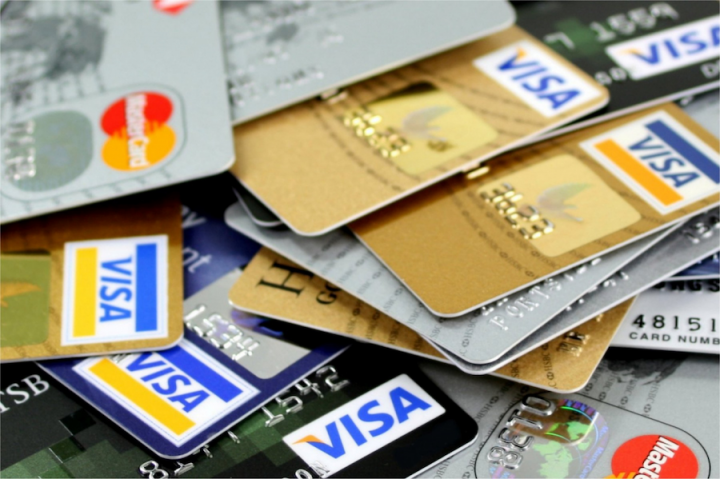
President Donald Trump’s call to cap U.S. credit card interest rates at 10 percent is weighing on bank stocks and raising broader concerns about consumer credit and confidence.
The proposal, announced Friday evening on Truth Social and intended to run for one year from January 2026, lacks a clear legal path but is already unsettling markets and lenders.
“This could have a very serious impact if it is actually implemented, and with Trump you never really know,” said Jeroen van Oerle, who manages fintech equities portfolios at Lombard Odier. Credit cards in the U.S. charge annual percentage rates, or APRs, which reflect the annual cost of carrying unpaid balances. A cap, Van Oerle told Investment Officer, would make lending to lower-credit borrowers uneconomic. “This is financial exclusion wrapped in the language of consumer protection.”
Trump said Americans should no longer be “ripped off” by card companies charging interest rates of 20 to 30 percent, calling for a one-year cap at 10 percent starting January 20, 2026. Such a move would require congressional approval, which appears unlikely.
Card issuers suffer
Even so, markets reacted quickly. Shares in major issuers such as Capital One and JPMorgan Chase fell, while investors reassessed buy-now-pay-later lenders such as Klarna and Affirm amid fears the policy could widen. The timing is especially awkward for JPMorgan, which last week agreed to become the new issuer of the Apple Card, replacing Goldman Sachs.
For lenders, the mechanics are simple. APRs apply only when consumers do not pay off their full balance at the end of the month. Interest income is therefore generated largely from households already under financial pressure, who rely on revolving credit to cover everyday expenses. Capping rates at 10 percent would compress margins on safer borrowers and eliminate profitability on riskier ones, forcing banks to ration credit through fewer approvals, lower limits and tighter underwriting.
The risk, van Oerle said, lies in the speed of the shock. Sudden changes in credit conditions tend to hit discretionary spending much faster than gradual policy shifts. A sharp move from typical APRs of 20 to 30 percent to a 10 percent cap could be too abrupt for lenders and consumers to adjust smoothly, triggering an immediate pullback in spending among lower-income households.
‘Mistake’
Criticism has also come from unlikely quarters. Bill Ackman, CEO of Pershing Square Capital Management and supporter of Trump, warned that the proposal would backfire. “This is a mistake, President,” he wrote in a now-deleted post on X, arguing lenders would cancel cards for millions of consumers, pushing them toward far more expensive and opaque forms of borrowing.
JP Morgan Chase CFO Jeremy Barnum said the impact of a direct cap on credit card interest rates would be “very traumatic”. The bank’s consumer lending business generated roughly 25 billion dollars in net interest income during the fourth quarter, more than half its reported revenue 46.8 billion.
“What’s actually simply going to happen is that the provision of the service will change dramatically,” Barnum told investors on Tuesday in a call. “Specifically, people will lose access to credit. Like on a very, very extensive and broad basis, especially the people who need it the most.”
Drag on economy
Academic research shows that such analysis probably is right. In the US credit cards act as a financial buffer in a country with limited social safety nets. 14.2 percent of Americans with a credit score have a poor borrowing history, according to data by Experian, one of three major credit rating bureaus. The Fed estimates that over 30 million American adults are altogether “unscorable”.
Without credit, Americans can struggle to rent an apartment, secure insurance, connect utilities or even pass employment checks. It is a gateway to basic economic participation.
In his book Poverty, by America, Princeton University professor of sociology Matthew Desmond documents that low-income Americans pay tens of billions of dollars each year in financial access fees, including more than 11 billion dollars in overdraft charges and nearly 10 billion dollars in payday loan fees. He estimates that Americans spend about 1.6 billion dollars a year simply to cash checks, often paying up to 10 percent of their wages to access money they have already earned.
Underbanked
The Federal Deposit Insurance Corporation estimates that 19 million Americans are already underbanked, relying mainly on nonbank financial services. Over 5 million U.S. households have no bank account at all. Any disruption to access risks becoming a drag on retail sales and services demand.
The risk is amplified by weak sentiment, with the University of Michigan’s consumer confidence index near historic lows. Consumer sentiment, van Oerle noted, has historically been a leading indicator for discretionary spending, and today’s unusually low readings suggest households are already behaving defensively.
Trump has sought to reframe himself as an “affordability” president as Democrats attempt to push cost-of-living concerns back to the center of the debate. Credit card interest rates are highly visible and widely disliked, making it a suitable topic for a political agenda.
Van Oerle said Trump’s tactic risks doing damage even if the policy is never implemented. Markets may joke about “TACO” — Trump Always Chickens Out — but regulatory uncertainty does not disappear once a proposal is walked back. The announcement alone can weigh on sentiment, prompt banks to tighten lending preemptively and push investors to demand higher risk premiums, creating a drag on confidence before any rule takes effect.