Oil and gas prices rose sharply on Monday as investors assessed the implications of U.S.-Israeli airstrikes on Iran and Tehran’s retaliation, with markets focused on whether the conflict risks widening.
The United States and Israel launched strikes on Iran early Saturday. Iran responded with attacks on Israel and U.S. bases in the Gulf. Brent crude, the global benchmark, climbed about 8 percent to 79 dollars a barrel on Monday morning. At the start of the year, it was trading near 60 dollars.
Adam Hetts, global head of multi-asset at Janus Henderson, drew comparisons with previous episodes of conflict between Israel and Iran in April 2024 and June 2025. “A continued increase to 80 dollars would be consistent with the June 2025 conflict, and 90 dollars consistent with April 2024, when global markets were able to largely shrug off the price rises as the conflicts were resolved in relatively short order. As a rough proxy for a major conflict, the Russian invasion of Ukraine in early 2022 brought oil prices above 100 dollars for a prolonged period with brief peaks above 120 dollars. Oil prices as they stand are pricing in a limited conflict of relatively short duration.”
The BlackRock Investment Institute similarly characterized a sustained supply shock as “more a tail risk than a near-term path”.
Further upside for oil
Further gains in oil remain possible. KBC said prices could rise in the coming days, “although a portion appears to be priced in,” strategist Siegfried Top and economist Tom Simonts wrote on the bank’s website. Rabobank energy strategists said in a note published before the strikes that an escalation could lift crude towards 90 dollars/barrel. Van Lanschot Kempen expects prices to trade in a “prolonged zone” between 100 and 110 dollars in the event of sustained disruption.
The emphasis on oil reflects the strategic importance of the Persian Gulf to global energy markets. Iran exports roughly 2 million barrels a day, accounting for several percentage points of global supply. More critically, about 20 percent of global oil consumption and 20–25 percent of global natural gas trade passes through the Strait of Hormuz, the narrow waterway linking the Persian Gulf with the Gulf of Oman.
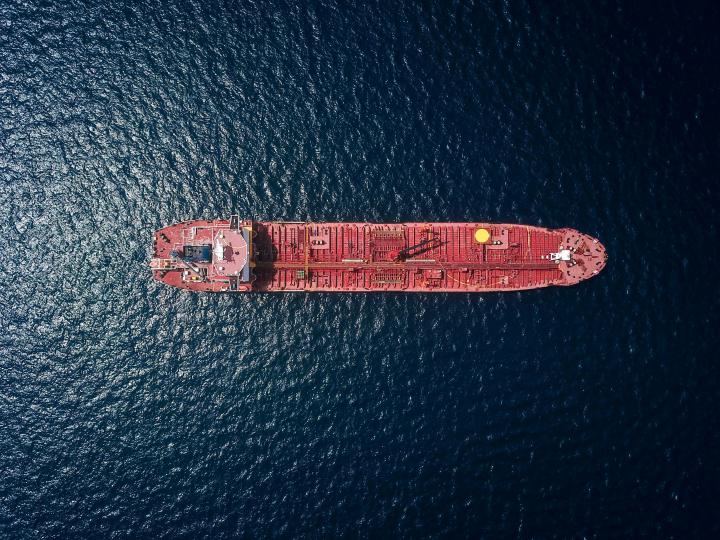
“Large shipping companies have suspended transit through the strait for safety reasons, while oil majors, traders and tanker owners are putting shipments of crude, fuel and LNG on hold,” Top and Simonts wrote. “Vessel tracking data point to a 38 to 70 percent decline in traffic, leaving hundreds of ships clustered on either side of the Strait.”
Leander Kalff, macro strategist at Rabobank, said market reactions were closely tied to concerns over potential supply disruptions. “Iran is, as we speak, attempting to block the Strait of Hormuz. Three tankers have already been hit. But high insurance premiums or even the suspension of coverage upon entering the Persian Gulf will deter many oil shippers from undertaking this journey in the near term.”
Broader market impact
According to Hetts, broader asset market moves would depend on whether uncertainty persists.
“Broader uncertainty suppresses investor sentiment, which can broadly weigh on risk-assets globally. This would likely make global developed market sovereigns, including U.S. Treasuries, and safe-haven currencies more attractive. In a prolonged period of uncertainty, increases in oil prices could generate a global inflationary scare, which in turn may reduce the likelihood of interest rate cuts by the U.S. Federal Reserve, currently expected for later this year.”
Luc Aben, economist at Van Lanschot Kempen, said higher energy prices would complicate the inflation outlook.
“More expensive energy fuels inflation. As a rule of thumb, a 10 percent increase in oil prices raises inflation by roughly 0.2 percentage points. Central banks may look through that, but it certainly does not increase the likelihood of policy rate cuts. That is particularly relevant for the U.S., where rate cuts are anticipated.”
Top and Simonts argued that the key question for investors is whether the economic fallout remains contained or develops into a broader macroeconomic shock via energy markets, trade and policy responses. While geopolitical events often dominate headlines, they wrote, the lasting market impact tends to depend on consequences for growth, inflation and monetary policy.
Scenarios
The BlackRock Investment Institute said it sees a 10- to 14-day buffer for how energy markets could handle disruptions. “Under a drawn-out conflict, we could also see a persistently higher regional risk premium. In these outcomes, we see dispersion intensifying with clear winners and losers across energy producers and importers, defensives and cyclicals, and policy-flexible versus externally vulnerable economies.”
“Our bottom line: We are not changing our investment views while eyeing the risk of a more persistent shock.”
Luc Aben, economist at Van Lanschot Kempen, outlined three scenarios: an initial escalation followed by de-escalation; or a prolonged escalation. “Our base case is the middle scenario. In that case, U.S. and Israeli dominance could force the (new) Iranian regime back to the negotiating table. Another possibility is an actual regime change. Experience shows, however, that this does not automatically lead to greater stability. In this scenario, oil prices could ultimately fall back towards 60 dollars, in line with the global economic environment.”
S&P 500 futures were trading about 1 percent lower just before U.S. trading opened, while European indices were also in negative territory. Natural gas prices jumped as much as 50 percent, the largest increase since August 2023, according to Bloomberg. Gold hovered near 5,400 dollars per troy ounce (31.1 grams), about 3 percent above Friday’s levels.