When United States forces seized President Nicolás Maduro of Venezuela, the political shock was immediate. The market reaction was not. Oil prices barely moved, investors stayed largely on the sidelines and attention quickly shifted from what had happened in Caracas to what it might reveal about how Washington now intends to wield power beyond its borders.
Oil markets were slightly higher on Monday, suggesting traders see little immediate impact on physical flows. Brent crude rose 0.6 percent to 61.12 dollars a barrel, while US West Texas Intermediate gained 0.7 percent to 57.73 dollars. The muted response reflects a simple reality: Venezuela’s vast reserves do not translate into usable barrels any time soon.
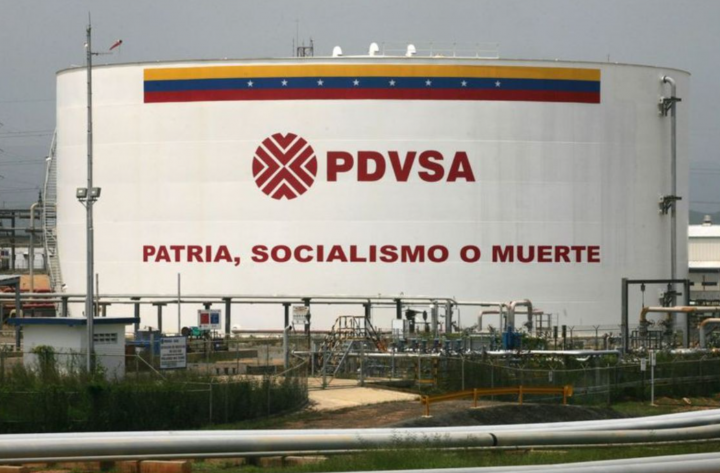
That view is widely shared among investment managers. Allianz Global Investors, Edmond de Rothschild, Janus Henderson and Morningstar all pointed to the same constraints. Venezuela’s oil sector, known for its hard-to-drill heavy sour crude oil, has been hollowed out by years of sanctions, underinvestment and institutional decay. Its political future remains uncertain. In that context, expectations of a rapid recovery in production look misplaced.
“Investors should, in our view, monitor ripple effects across emerging market debt, currencies and equities, while considering hedges against energy price swings and political risk.”
Allianz Global Investors
Edmond de Rothschild Asset Management is blunt in its assessment. “Contrary to potential expectations, no additional barrels are likely to reach the market in the short term,” wrote chief investment officer Benjamin Melman and Michaël Nizard, head of multi-assets and overlay, in a note to investors. Production capacity has deteriorated to such an extent that even under favourable conditions, “restoring production by 1 to 2 million barrels per day will take 5 to 10 years and up to 100 billion dollars in investment.”
‘Major geopolitical shift’
Allianz Global Investors places the episode firmly in a geopolitical frame. “We believe US intervention in Venezuela, including Maduro’s capture, signals a major geopolitical shift with implications for regional stability and global security debates,” said Christian Schulz, chief economist, and portfolio manager Alexander Robey in a note to investors. The focus now is less on immediate repricing and more on how political risk is being reintroduced into the equation.
Equity markets responded more selectively. Shares of US oil companies rose sharply on Monday as investors weighed potential long-term strategic benefits. Chevron shares gained 6.4 percent, Exxon Mobil rose 3 percent, ConocoPhillips advanced 5.5 percent and oilfield services group Schlumberger, now known as SLB, climbed 8.5 percent.
Beyond oil, CIOs see the move against Venezuela as part of a broader geopolitical reordering rather than a market event in its own right. While the arrest of Maduro is symbolically important, “the immediate impact on global markets is likely to be limited,” said Janus Henderson.
Monroe Doctrine revived
Edmond de Rothschild described the Caracas raid as “a deliberate return to the Monroe Doctrine, reminding us that the Western Hemisphere remains, in Washington’s eyes, an area of direct influence.”
The Monroe Doctrine, first articulated in 1823, holds that the Americas fall within the United States’ strategic sphere and should be shielded from rival powers. For decades, that principle was softened by globalisation and multilateral institutions. President Donald Trump is now reviving that doctrine as a guiding framework rather than a historical footnote.
That reading is reinforced by Washington’s latest National Security Strategy, a concise 33-page document released last November that has become essential reading for anyone trying to make sense of current geopolitics. “We will assert and enforce a ‘Trump Corollary’ in the Monroe Doctrine,” the strategy says.
The strategy places renewed emphasis on stability and control within the Western Hemisphere, while signalling that allies, particularly in Europe, are expected to shoulder more responsibility for their own economic and security resilience.
Greenland
The focus on the Western Hemisphere has not stopped at Venezuela. In recent days, President Trump has again revived his long-standing interest in Greenland, openly framing the Arctic territory as a matter of US national security. The timing has not gone unnoticed in Europe. Coming immediately after the operation in Caracas, the renewed rhetoric has reinforced the sense that Washington is asserting its strategic priorities more explicitly, and more geographically, than in the recent past.
European reactions have been unusually sharp. Denmark, which retains responsibility for Greenland’s defence and foreign policy, has rejected any suggestion of US control, with Prime Minister Mette Frederiksen warning that such language has no place between allies. Greenland’s own leadership has been equally direct, pushing back against what it described as fantasies of annexation. In Brussels, the European Commission has reiterated its commitment to territorial integrity, even as officials have been careful to avoid escalating tensions with Washington.
It’s clear that geography now is back at the centre of geopolitics, and alliances can no longer be taken for granted as frictionless. The United States has signalled where it sees its core interests, from Latin America to the Arctic, and expects partners to adjust accordingly.
As Allianz Global Investors put it, “investors should, in our view, monitor ripple effects across emerging market debt, currencies and equities, while considering hedges against energy price swings and political risk.”